
WELCOME TO GALAPAGOS WITH MATTIAS KLUM
This document contains some important information ahead of the trip to the Galapagos.
Please read through the document carefully. If you have any questions afterwards, you are warmly welcome to contact Hans Elmqvist at Zoom Fotoresor by phone at +46 70 180 90 99 or via email hans.elmqvist@zoomfotoresor.se
WELCOME TO GALAPAGOS WITH MATTIAS KLUM
This document contains some important information ahead of the trip to the Galapagos.
Please read through the document carefully. If you have any questions afterwards, you are warmly welcome to contact Hans Elmqvist at Zoom Fotoresor by phone at +46 70 180 90 99 or via email hans.elmqvist@zoomfotoresor.se
BEFORE THE TRIP
BEFORE THE TRIP
YOUR FLIGHT TICKET
Please check that the spelling of your name matches the spelling in your passport.
LUGGAGE
Airlines usually allow two pieces of luggage per person: one carry-on and one checked bag. The checked bag may weigh up to 23 kg, and the carry-on up to 8 kg with dimensions of 56 x 45 x 25 cm. For exact details regarding your airline’s baggage rules, please visit the airline’s website.
CHECK-IN
Check-in must be completed no later than one hour before departure. However, we recommend arriving at least two hours before departure, as there may be queues at passport control and security checks.
PASSPORT
Don’t forget your passport – airlines will always ask to see it during check-in. Without a valid passport, you will not be allowed to board the flight or enter Ecuador.
To enter Ecuador, your passport must be valid for at least six months after your return date.
CURRENCY / EXCHANGE
In Ecuador (including the Galápagos Islands), the official currency is the US dollar (USD). The exchange rate varies, but 100 USD is approximately 75 GBP (as of October 2025). There are ATMs on San Cristóbal, Santa Cruz, and to some extent on Isabela, but access is often limited or unavailable. Foreign bank cards may incur withdrawal fees. Many ATMs limit withdrawals to $200 per transaction, and there may also be daily limits. Most travelers are advised to bring US dollars in cash, especially in smaller denominations ($5, $10, and $20), for use where cards are not accepted.
VACCINATIONS
We recommend that you contact your local vaccination center well in advance of departure for up-to-date information, as some vaccinations should be taken early. For trips to the Galápagos, the following are usually recommended:
· Polio, tetanus, measles, and diphtheria vaccinations
· Protection against hepatitis A
· Hepatitis B vaccine (for longer stays in the country or if you plan to travel multiple times to so-called risk countries)
VISA
No visa is required to enter Ecuador, but your passport must be valid for at least six months after your return. UK citizens can usually stay as tourists for up to 90 days within a one-year period. If you are not a UK citizen, it’s important to check which visa rules apply to your nationality.
NOTE! Upon request, a valid health insurance policy may need to be shown when entering the Galápagos Islands.
WHATSAPP GROUP
We’ve created a WhatsApp group for the trip. Here, you can communicate, share photos, and exchange information with other participants and with Mattias before, during, and after the trip. You will receive an invitation via your phone. If you’re not already using WhatsApp, you’ll receive an SMS with instructions on how to join. If you’re a travel companion and we don’t have your phone number, please send it to us.
If you have any problems joining, email Alexander at the address below and he will assist you:
alexander.elmqvist@zoomphototours.com
PARTICIPANT LIST
In the email, you’ll find a PDF with the participant list for the trip. NOTE: If any participant has chosen not to share their information, only their name will be listed.
SEND YOUR FLIGHT SCHEDULE
If you haven’t already done so, please send a copy of your flight itinerary as soon as possible so we know how each traveler is arriving. Send it to: info@zoomfotoresor.se
ITINERARY
ITINERARY
During the trip, Mattias will help you develop as a photographer, both individually and during group sessions where we work on photo editing and image reviews together — all to help you get the most out of your photography and the journey.
NOTE! Depending on current weather conditions, the itinerary may be adjusted to maximize photographic opportunities.
During all boat tours, snorkeling equipment is available. However, there are no scuba diving tours, as diving with tanks requires specialized boats.
ARRIVAL NOVEMBER 13th
If you are arriving on November 13th and have not booked a hotel on your own, we have reserved rooms at the five-star Illa Experience Hotel.
Click here for the hotel’s website.
DAY 1 (Nov 15) – ARRIVAL IN QUITO
Arrival in Quito, the capital of Ecuador, by flight on your own. Check-in during the day at the five-star Illa Experience Hotel. Here you will be welcomed by Mattias Klum and Zoom Photo Tours host Daniel Iglesias.
We meet in the hotel bar at 7:00 PM, followed by a welcome dinner in the hotel’s restaurant — a great opportunity to get to know each other better and discuss our upcoming photography adventure. (D)
DAY 2 (Nov 16) – QUITO – BELLAVISTA CLOUD FOREST
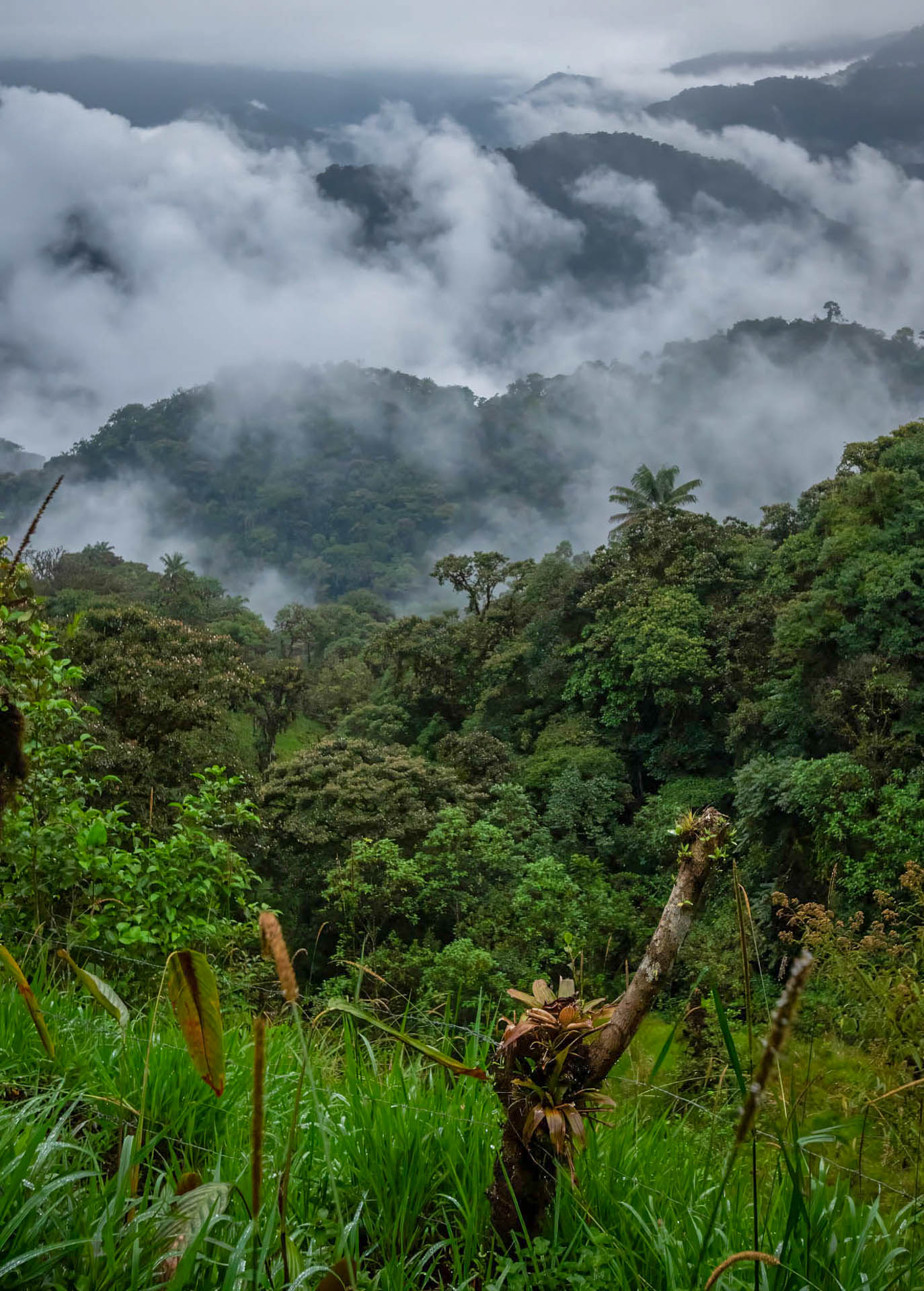
Early in the morning, right after breakfast, we head northwest to the equator line and the collapsed volcanic crater Pululahua. “Pululahua” means “water cloud” or “mist,” a fitting name as the volcano is often shrouded in fog in the afternoons. The volcano erupted massively 2,500 years ago, devastating the surrounding areas. Today, it’s a peaceful haven for nature lovers, rich in flora (over 2,000 species) and a variety of birds and mammals.
We’ll walk along the crater rim, taking in spectacular views and countless photo opportunities.
From Pululahua, we continue to Bellavista Cloud Forest Reserve, known for its rich biodiversity and largely unexplored plant and animal life. You might spot and photograph mammals such as the spectacled bear, tayra, and — with luck — even a puma or the newly discovered olinguito.
Upon arrival, we hike up to the mountaintop for panoramic shots, followed by lunch and exploration of the rainforest’s unique flora and fauna.
Expect vibrant birdlife, including tanagers, antpittas, swallow-tailed nightjars, jays, and numerous hummingbirds — along with blooming orchids and Medinilla plants. After a day of exploration, we check in at the beautifully located Bellavista Cloud Forest Lodge. (B, L, D)
DAY 3 (Nov 17) – BELLAVISTA CLOUD FOREST
Early morning, we leave the lodge to photograph the Cock of the Rock, Ecuador’s national bird. It’s a colorful and iconic species, often seen feeding during the early hours.
After a hearty breakfast back at the lodge, we spend the day exploring the reserve’s trails. With some luck, we might capture images of golden-headed quetzals, Chocó toucans, and crimson-rumped toucanets.
Mattias will be with us the whole time to offer personalized guidance on how to improve your photography. (B, L, D)
DAY 4 (Nov 18) – BELLAVISTA – QUITO
Before breakfast, we make the most of the morning light with a final photo walk in Bellavista Cloud Forest. Afterward, we return to Quito, nestled between the Andes mountains and the western slope of the Guagua Pichincha volcano.
We enjoy lunch and a walking tour of the historic district, known for its charm and great opportunities for street photography. We then check in again at the Illa Experience Hotel and have dinner at the lovely Los Geraniosrestaurant. (B, L, D)
DAY 5 (Nov 19) – QUITO – GALAPAGOS
Time for the next leg of our photography journey — the legendary Galápagos Islands!
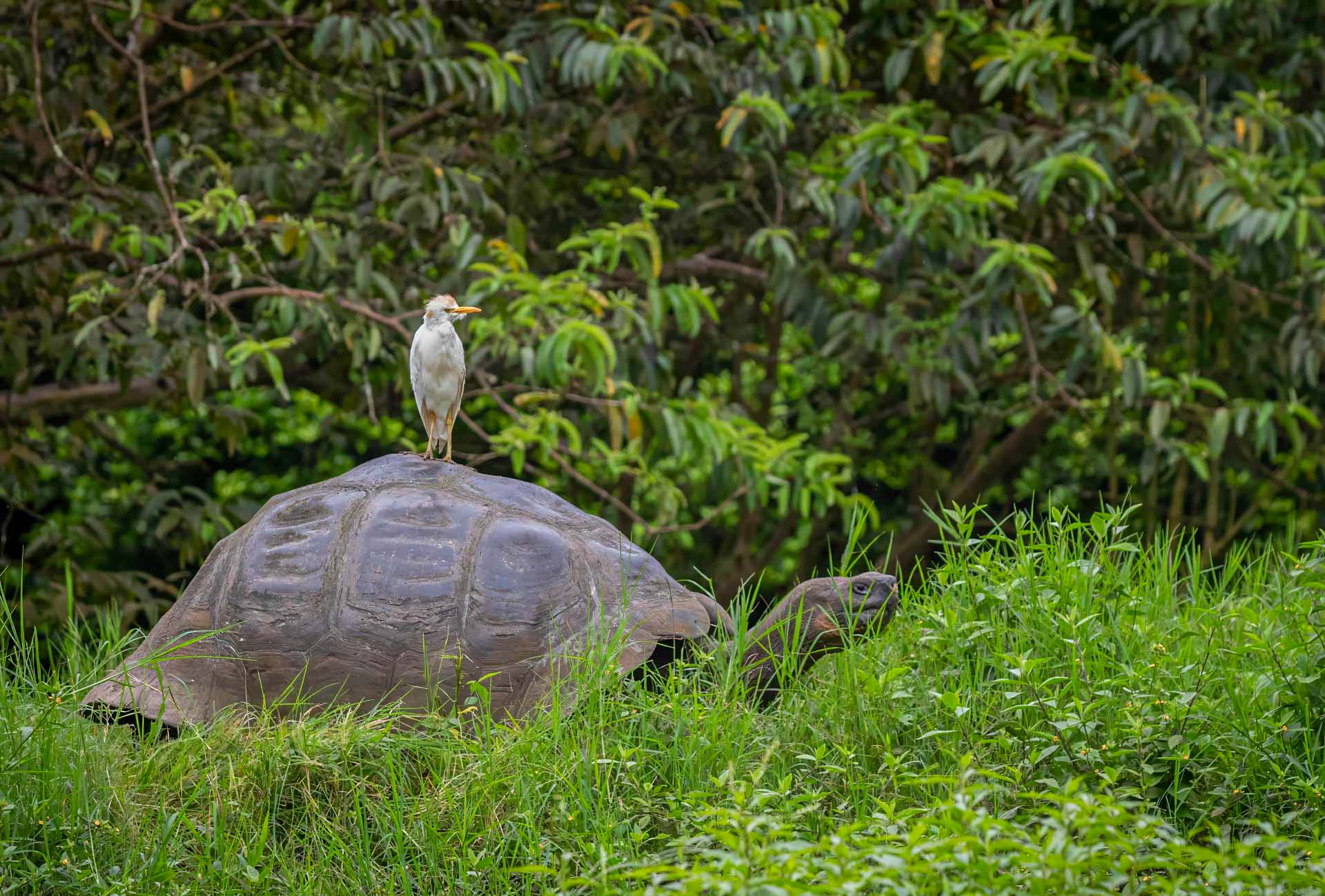
We transfer to the airport for the 11:05 AM flight to Baltra Island, formerly a U.S. airbase during WWII. Our Galápagos adventure begins on Santa Cruz Island, where we’ll photograph the famous giant tortoises, unique to Galápagos. These prehistoric creatures can grow up to 130 cm and weigh 200 kg, making them some of the largest land tortoises alive.
We start with a group lunch, and with a bit of luck, we may already spot the tortoises. Then we visit the Charles Darwin Research Station, the heart of scientific research on the islands. Darwin’s theories on natural selection and evolutionwere developed here, and the station continues his legacy through conservation projects.
Thanks to Mattias’ contacts, we’ll hear a presentation about conservation work, including efforts to protect giant tortoisesand marine iguanas. We also visit areas where tortoises mate and lay eggs, and where land iguanas are studied.
After a full day, we check in at La Isla Hotel in Puerto Ayora, close to the sea. You’ll have free time before dinner to explore the town on your own. (B, L, D)
DAY 6 (Nov 20) – GALAPAGOS
We head to Santa Fé Island, the oldest island in the Galápagos, formed by tectonic uplift, not volcanic eruption.
This island is home to several endemic species, including the Barrington land iguana, Santa Fe marine iguana, and the Santa Fe rice rat.
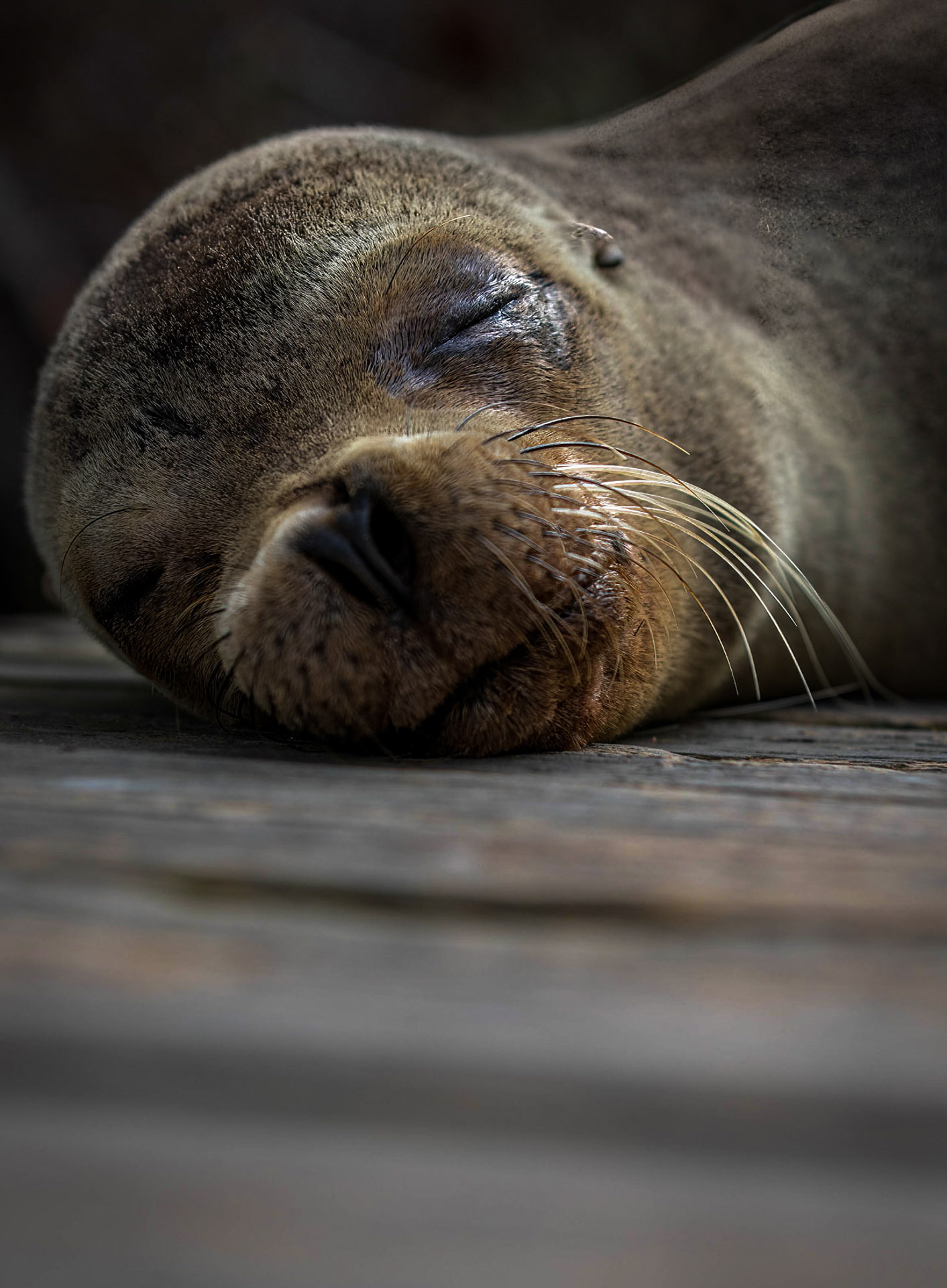
We anchor in a bay with a white sand beach where sea lions bask in the sun. After photographing them, we hike inland to see iguana feeding under Opuntia cactus trees.
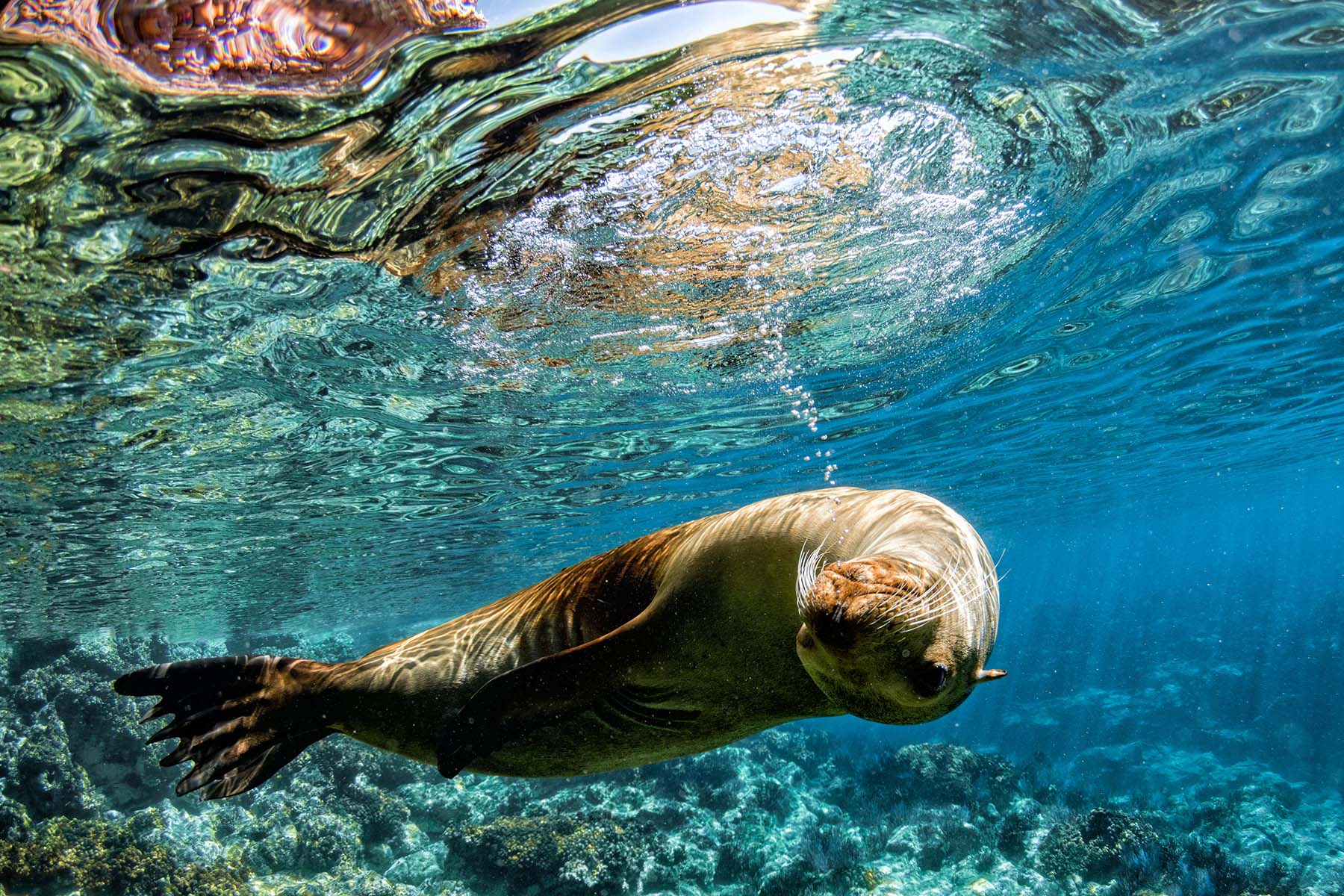
Back on the boat, we enjoy lunch before snorkeling in the crystal-clear bay, where we might see tropical fish, sea turtles, playful sea lions, and, if we’re lucky, a Galápagos shark. (B, L, D)
DAY 7 (Nov 21) – GALAPAGOS
We board a boat for a full day at Seymour Island, a small uplifted lava island with unique low vegetation.
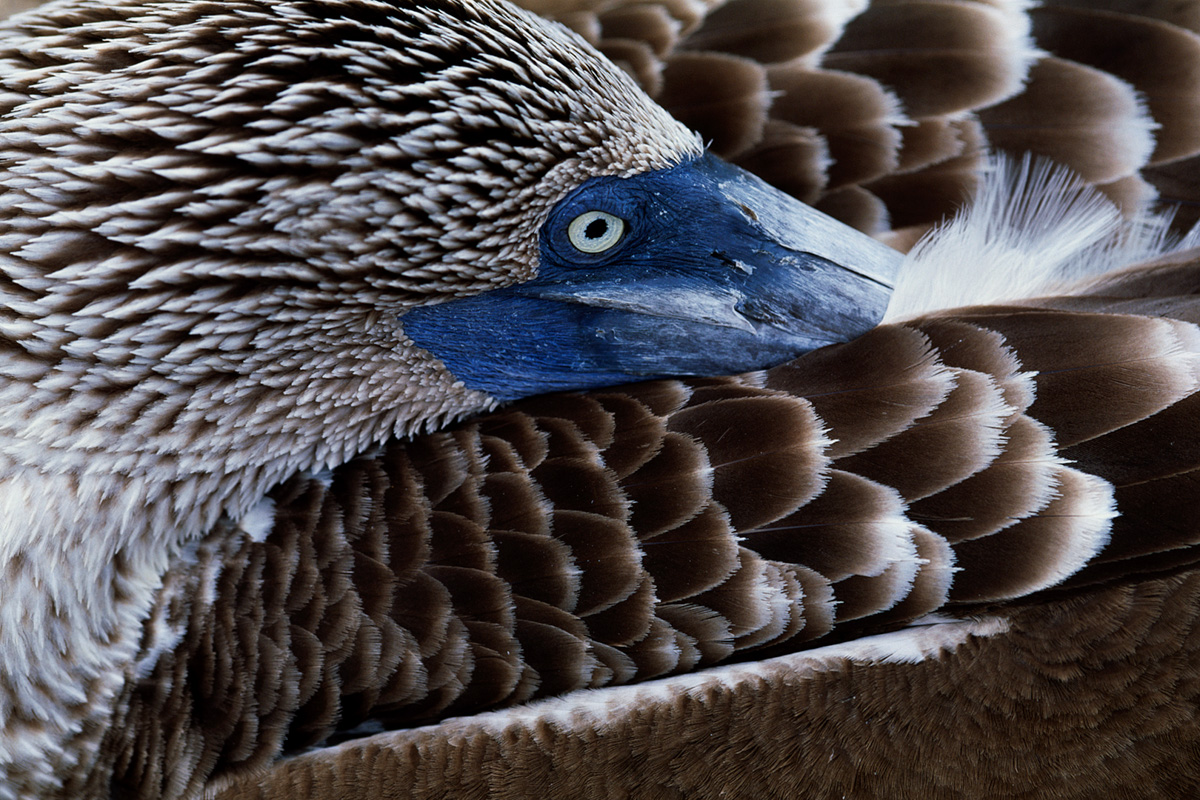
Among the bushes and along the shoreline, we find marine iguana trails, surfing sea lion pups, and nesting frigatebirds — easily recognized by their red throat pouches. Also expect sightings of the blue-footed booby.
Later, we head to Magic Galapagos Tented Camp, set on a hillside with ocean views. You’ll sleep in private safari tents with bathrooms, surrounded by nature — and possibly giant tortoises wandering nearby. The Milky Way will light up the night sky. (B, L, D)
DAY 8 (Nov 22) – GALAPAGOS
After check-out, we boat to Isabela Island, checking in at Hotel Albemarle, right on the white-sand beach in Puerto Villamil, where we’ll stay two nights.
We begin with a tour of the Tintoreras islets, named after the white-tipped reef sharks swimming in the area.
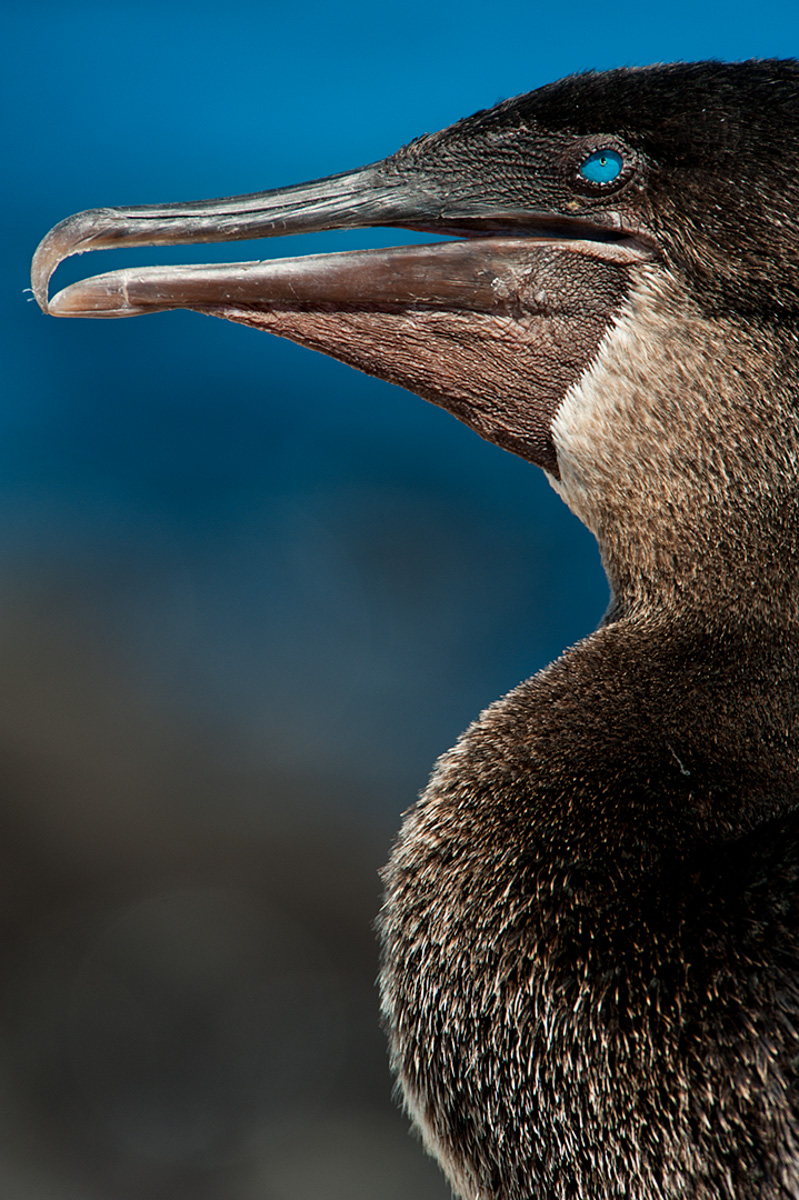
On land, the black lava rocks are home to hundreds of marine iguanas, providing incredible close-up photo opportunities. Other sightings may include penguins, pelicans, and brightly colored crabs that contrast beautifully against the dark rocks.
In the afternoon, we snorkel in the bay among penguins, sea lions, rays, and reef sharks, before heading inland to explore Isabela’s wetlands, where we’ll find more iguanas and possibly wild giant tortoises. Dinner at the hotel ends another exciting day. (B, L, D)
DAY 9 (Nov 23) – GALAPAGOS
Today we visit Roca Union, where we can snorkel among sea turtles, reef sharks, rays, and schools of colorful fish. It’s a highlight whether you’re photographing or just observing.
After lunch, we walk the Wetlands Trail, encountering marine iguanas and diverse mangrove trees, great for creative photography.
At the end of the trail lies the Wall of Tears, a haunting WWII-era landmark built by prisoners with lava rocks — nearly 100 meters long and up to six meters high.
On the way back, we’ll stop at a small lagoon for a refreshing swim. Back in Puerto Villamil, there’s time to relax on the beach before enjoying a final group dinner at a local restaurant. (B, L, D)
DAY 10 (Nov 24) – RETURN HOME
After an unforgettable trip filled with iguanas, sea lions, and giant tortoises, we take the boat back to Santa Cruz and then transfer to the airport for flights home on your own. (B)
OVERNIGHT HOTEL – NOVEMBER 24
Since all flights depart on November 26, we have booked an overnight stay at Hotel Patio Andaluz. Rooms are paid directly on-site.
Price: 312 USD for a double room for two nights.
Click here for the hotel’s website.
FOLLOW-UP MEETING & PHOTO OF THE TRIP
A few weeks after returning home, Mattias will host a follow-up meeting where we review each other’s photos. Before that, you’ll be asked to submit your best images from the trip, and Mattias will select the “Photo of the Trip.”
This photo will automatically advance to the finals of the “Photo of the Year 2025” competition and compete for great prizes.


Read more about the program.
During the trip, Mattias will help you develop as a photographer, both individually and during group sessions where we work on photo editing and image reviews together — all to help you get the most out of your photography and the journey.
NOTE! Depending on current weather conditions, the itinerary may be adjusted to maximize photographic opportunities.
During all boat tours, snorkeling equipment is available. However, there are no scuba diving tours, as diving with tanks requires specialized boats.
ARRIVAL NOVEMBER 13th
If you are arriving on November 13th and have not booked a hotel on your own, we have reserved rooms at the five-star Illa Experience Hotel.
Click here for the hotel’s website.
DAY 1 (Nov 15) – ARRIVAL IN QUITO
Arrival in Quito, the capital of Ecuador, by flight on your own. Check-in during the day at the five-star Illa Experience Hotel. Here you will be welcomed by Mattias Klum and Zoom Photo Tours host Daniel Iglesias.
We meet in the hotel bar at 7:00 PM, followed by a welcome dinner in the hotel’s restaurant — a great opportunity to get to know each other better and discuss our upcoming photography adventure. (D)
DAY 2 (Nov 16) – QUITO – BELLAVISTA CLOUD FOREST
Early in the morning, right after breakfast, we head northwest to the equator line and the collapsed volcanic crater Pululahua. “Pululahua” means “water cloud” or “mist,” a fitting name as the volcano is often shrouded in fog in the afternoons. The volcano erupted massively 2,500 years ago, devastating the surrounding areas. Today, it’s a peaceful haven for nature lovers, rich in flora (over 2,000 species) and a variety of birds and mammals.
We’ll walk along the crater rim, taking in spectacular views and countless photo opportunities.
From Pululahua, we continue to Bellavista Cloud Forest Reserve, known for its rich biodiversity and largely unexplored plant and animal life. You might spot and photograph mammals such as the spectacled bear, tayra, and — with luck — even a puma or the newly discovered olinguito.
Upon arrival, we hike up to the mountaintop for panoramic shots, followed by lunch and exploration of the rainforest’s unique flora and fauna.
Expect vibrant birdlife, including tanagers, antpittas, swallow-tailed nightjars, jays, and numerous hummingbirds — along with blooming orchids and Medinilla plants. After a day of exploration, we check in at the beautifully located Bellavista Cloud Forest Lodge. (B, L, D)
DAY 3 (Nov 17) – BELLAVISTA CLOUD FOREST
Early morning, we leave the lodge to photograph the Cock of the Rock, Ecuador’s national bird. It’s a colorful and iconic species, often seen feeding during the early hours.
After a hearty breakfast back at the lodge, we spend the day exploring the reserve’s trails. With some luck, we might capture images of golden-headed quetzals, Chocó toucans, and crimson-rumped toucanets.
Mattias will be with us the whole time to offer personalized guidance on how to improve your photography. (B, L, D)
DAY 4 (Nov 18) – BELLAVISTA – QUITO
Before breakfast, we make the most of the morning light with a final photo walk in Bellavista Cloud Forest. Afterward, we return to Quito, nestled between the Andes mountains and the western slope of the Guagua Pichincha volcano.
We enjoy lunch and a walking tour of the historic district, known for its charm and great opportunities for street photography. We then check in again at the Illa Experience Hotel and have dinner at the lovely Los Geraniosrestaurant. (B, L, D)
DAY 5 (Nov 19) – QUITO – GALAPAGOS
Time for the next leg of our photography journey — the legendary Galápagos Islands!
We transfer to the airport for the 11:05 AM flight to Baltra Island, formerly a U.S. airbase during WWII. Our Galápagos adventure begins on Santa Cruz Island, where we’ll photograph the famous giant tortoises, unique to Galápagos. These prehistoric creatures can grow up to 130 cm and weigh 200 kg, making them some of the largest land tortoises alive.
We start with a group lunch, and with a bit of luck, we may already spot the tortoises. Then we visit the Charles Darwin Research Station, the heart of scientific research on the islands. Darwin’s theories on natural selection and evolutionwere developed here, and the station continues his legacy through conservation projects.
Thanks to Mattias’ contacts, we’ll hear a presentation about conservation work, including efforts to protect giant tortoisesand marine iguanas. We also visit areas where tortoises mate and lay eggs, and where land iguanas are studied.
After a full day, we check in at La Isla Hotel in Puerto Ayora, close to the sea. You’ll have free time before dinner to explore the town on your own. (B, L, D)
DAY 6 (Nov 20) – GALAPAGOS
We head to Santa Fé Island, the oldest island in the Galápagos, formed by tectonic uplift, not volcanic eruption.
This island is home to several endemic species, including the Barrington land iguana, Santa Fe marine iguana, and the Santa Fe rice rat.
We anchor in a bay with a white sand beach where sea lions bask in the sun. After photographing them, we hike inland to see iguana feeding under Opuntia cactus trees.
Back on the boat, we enjoy lunch before snorkeling in the crystal-clear bay, where we might see tropical fish, sea turtles, playful sea lions, and, if we’re lucky, a Galápagos shark. (B, L, D)
DAY 7 (Nov 21) – GALAPAGOS
We board a boat for a full day at Seymour Island, a small uplifted lava island with unique low vegetation.
Among the bushes and along the shoreline, we find marine iguana trails, surfing sea lion pups, and nesting frigatebirds — easily recognized by their red throat pouches. Also expect sightings of the blue-footed booby.
Later, we head to Magic Galapagos Tented Camp, set on a hillside with ocean views. You’ll sleep in private safari tents with bathrooms, surrounded by nature — and possibly giant tortoises wandering nearby. The Milky Way will light up the night sky. (B, L, D)

DAY 8 (Nov 22) – GALAPAGOS
After check-out, we boat to Isabela Island, checking in at Hotel Albemarle, right on the white-sand beach in Puerto Villamil, where we’ll stay two nights.
We begin with a tour of the Tintoreras islets, named after the white-tipped reef sharks swimming in the area.
On land, the black lava rocks are home to hundreds of marine iguanas, providing incredible close-up photo opportunities. Other sightings may include penguins, pelicans, and brightly colored crabs that contrast beautifully against the dark rocks.
In the afternoon, we snorkel in the bay among penguins, sea lions, rays, and reef sharks, before heading inland to explore Isabela’s wetlands, where we’ll find more iguanas and possibly wild giant tortoises. Dinner at the hotel ends another exciting day. (B, L, D)
DAY 9 (Nov 23) – GALAPAGOS
Today we visit Roca Union, where we can snorkel among sea turtles, reef sharks, rays, and schools of colorful fish. It’s a highlight whether you’re photographing or just observing.
After lunch, we walk the Wetlands Trail, encountering marine iguanas and diverse mangrove trees, great for creative photography.
At the end of the trail lies the Wall of Tears, a haunting WWII-era landmark built by prisoners with lava rocks — nearly 100 meters long and up to six meters high.
On the way back, we’ll stop at a small lagoon for a refreshing swim. Back in Puerto Villamil, there’s time to relax on the beach before enjoying a final group dinner at a local restaurant. (B, L, D)
DAY 10 (Nov 24) – RETURN HOME
After an unforgettable trip filled with iguanas, sea lions, and giant tortoises, we take the boat back to Santa Cruz and then transfer to the airport for flights home on your own. (B)
OVERNIGHT HOTEL – NOVEMBER 24
Since all flights depart on November 26, we have booked an overnight stay at Hotel Patio Andaluz. Rooms are paid directly on-site.
Price: 312 USD for a double room for two nights.
Click here for the hotel’s website.
FOLLOW-UP MEETING & PHOTO OF THE TRIP
A few weeks after returning home, Mattias will host a follow-up meeting where we review each other’s photos. Before that, you’ll be asked to submit your best images from the trip, and Mattias will select the “Photo of the Trip.”
This photo will automatically advance to the finals of the “Photo of the Year 2025” competition and compete for great prizes.
HOTELS
HOTELS


USEFUL INFORMATION
USEFUL INFORMATION
TIPPING
Tipping is common in many parts of the world, including South America. Service staff such as waiters, cleaners, porters, etc., typically receive low base salaries and rely on tips for doing a good job. Tipping for the local head guide, drivers, and hotel staff is not included in the trip price.
General tipping guidelines:
-
1 USD per suitcase for porters
-
5–10% of the bill in bars and restaurants
-
1 USD per day for hotel cleaning staff
For the main guide who accompanies the trip (on the mainland and Galapagos), 10 USD per person per day is customary and should be given directly to him/her. For the driver, the group usually collects about 3 USD per day, which is handed over on the final day.
NOTE: Tipping is not mandatory. It should only be given if the service has been good.
ELECTRICITY
Ecuador uses 120–127 volts and flat blade plugs (some with a third, round grounding pin). We advice you to bring an adapter.
It’s also a good idea to bring a power strip with multiple outlets so you can easily charge camera batteries, phones, and other electronics.
CLIMATE
The climate in Ecuador is highly varied. On the coastal lowlands and in the Amazon basin, it’s tropical and warm. In the highlands, the climate is temperate and generally cooler.
-
Quito: Around 17–18°C during the day, dropping to ~10°C at night. Rainfall in November is about 75 mm.
-
Cloud Forest: Daytime ~20°C, nighttime ~10°C. Afternoon rain showers are common.
-
Galapagos: Much drier, daytime temperatures around 25°C, and ~20°C at night.
CLOTHING
Casual clothing is appropriate throughout the trip. Bring comfortable walking shoes and clothes you don’t mind getting dirty, as we’ll spend a lot of time outdoors and on hikes.
Evenings can be cool, so bring warm layers like a fleece or sweater. For the first days in the rainforest, extra changes of clothes are useful due to high humidity and the chance of getting wet or muddy.
Refer to the Packing List at the end of the brochure for more details.
CREDIT CARDS
Visa and Mastercard are widely accepted in cities, most hotels/lodges, and larger shops.
STOMACH ISSUES
Ecuador has a different bacterial flora than the UK, so it’s important to be cautious:
-
Avoid tap water — drink bottled mineral water only.
-
Stay hydrated, especially in warmer areas. Consider bringing electrolyte supplements (e.g., Resorb).
-
Bring hand sanitizer and use it before meals.
-
Carry anti-diarrheal medication such as Imodium Plus or Bifiform Travel — both are over-the-counter in Sweden.
FOOD & DRINK
Ecuador is known for its exotic fruits, seafood, and traditional dishes. Popular national and regional dishes include:
-
Ceviche with shrimp
-
Roasted corn and stuffed pastries
-
Locro soup – made with cheese, avocado, and potatoes
-
Humitas and tamales (corn-based dishes)
-
Llapingachos (potato patties)
MOSQUITOES
Mosquitoes appear mainly after sunset. To avoid bites:
-
Wear long sleeves and trousers in the evening
-
Apply repellent to ankles, wrists, hands, and neck
-
Use mosquito nets and air conditioning where available
LANGUAGE
The official language is Spanish, but Kichwa (an indigenous language) is also common.
English is spoken in most tourist destinations and sectors that rely heavily on tourism.
PHONE & INTERNET
You’ll generally have mobile coverage (GSM) in and around major cities, but not always in rural areas. Galapagos has limited and sometimes unreliable coverage. Hotel landlines are reliable but expensive.
International calling codes:
-
To Ecuador: +593
-
From Ecuador to Sweden: +46
Important: Check with your mobile provider if you have roaming agreements in Ecuador. Otherwise, calls may be very expensive. Use Wi-Fi-based apps like WhatsApp, Zoom, or Messenger for calls when online.
TIME DIFFERENCE
Galapagos: 6 hours behind UK (winter time) and Quito: 5 hours behind UK
WATER
Never drink tap water. Always use bottled water for drinking.
WI-FI
All hotels offer free Wi-Fi, except Galapagos Magic, which does not have Wi-Fi.
IMPORTANT PHONE NUMBERS
-
Photographer – Mattias Klum: +46 70 818 25 69
-
Zoom Host – Daniel Iglesias: +46 72 311 66 16
-
Emergency numbers in Ecuador: Police: 101 and Ambulance: 131
PACKING LIST
Below are some tips on what to bring. This is not mandatory — more of a guideline.
BAGS
-
One suitcase, or preferably a duffel bag. A duffel is easier to pack into buses and takes up less space in rooms. Be mindful of weight limits.
-
A camera bag or camera backpack.
SHOES & CLOTHING
-
Sturdier jogging shoes or hiking shoes.
-
A pair of sandals or lighter shoes, plus socks.
-
Summer clothes like light polo shirts or button-downs.
-
Shorts or lightweight long pants that dry quickly (jeans are not recommended).
-
Long-sleeved shirts for rainforest treks.
-
A fleece or warm sweater for cooler evenings.
-
A rain poncho or light rain jacket.
-
Swimwear.
-
A cap or hat for sun protection.
OTHER EQUIPMENT
-
Binoculars.
-
Mobile phone.
-
Power adapter (for Ecuador’s 120-127V outlets with flat prongs).
-
A small flashlight.
-
Sunglasses.
-
Toiletries.
-
Water bottle for treks.
-
Plastic bags to protect fragile items from moisture or rain.
-
Sewing kit: Needle, thread, and a few safety pins for emergency fixes.
MEDICAL SUPPLIES
It is recommended that you bring some personal medical items such as:
-
Band-aids
-
Antiseptic cream
-
Painkillers (e.g., paracetamol like Alvedon)
-
Anti-diarrhea medication
-
Hand sanitizer
-
Lip balm with SPF
-
Sunscreen
-
Mosquito repellent
CAMERA GEAR
Most photo opportunities will happen either on foot or from a boat. Try to limit the number of cameras and lenses you bring, as baggage weight restrictions apply on the flight.
NOTE: Flashes and drones are strictly prohibited on the Galapagos Islands.
Recommended equipment:
-
Camera with zoom lenses from 14–24mm up to 200mm — ideal for landscapes.
-
For wildlife and nature photography, long telephoto lenses up to 500mm are recommended.
-
Underwater camera or a waterproof housing is recommended for snorkeling.
-
A monopod or tripod.
-
Extra batteries – at least one.
-
Battery charger for your camera and other electronics.
-
A power strip with 2–3 outlets so you can charge multiple devices simultaneously.
-
Memory cards (bring more than you think you’ll need!) and a portable hard drive.
-
Cleaning gear: Lens cloths, compressed air, or other camera-cleaning tools.
-
Spare batteries (if your gear requires them).
-
A laptop for photo editing, with either Photoshop or Lightroom.
-
An external hard drive to back up photos (if not backing up on the laptop).
-
Some form of camera protection — especially useful in the rainforest where rain is likely.
NYHETSBREV
Bli först med att höra om nya resor, erbjudanden och reseinspiration från Zoom.
KONTAKTA OSS
E-post: info@zoomfotoresor.se
Telefon: +46 (0)470 – 466 40
Följ våra fotoäventyr på sociala medier!



Foto: Serkan Günes
NYHETSBREV
Bli först med att höra om nya resor, erbjudanden och reseinspiration från Zoom.
KONTAKTA OSS
E-post: info@zoomfotoresor.se
Telefon: +46(0) 470 – 466 40
Följ våra fotoäventyr på sociala medier!
Foto: Hans Strand