
GOOD TO KNOW
WELCOME TO ZIMBABWE WITH PHOTOGRAPHER TOM SVENSSON
This document contains important information ahead of the trip to Zimbabwe and Mana Pools.
Please read through the document. If you then have any questions, you are most welcome to contact Hans Elmqvist at Zoom Photo Tours on +46 70-180 90 99 or by email, hans.elmqvist@zoomphototours.com
WELCOME TO ZIMBABWE
WITH TOM SVENSSON
This document contains important information ahead of the trip to Zimbabwe and Mana Pools.
Please read through the document. If you then have any questions, you are most welcome to contact Hans Elmqvist at Zoom Photo Tours on +46 70-180 90 99 or by email, hans.elmqvist@zoomphototours.com
BEFORE THE TRIP
BEFORE THE TRIP
YOUR FLIGHT TICKET
Check that the spelling of your name matches the spelling in your passport.
LUGGAGE
Airlines normally allow two pieces of luggage per person, one carry-on and one suitcase. The suitcase may normally weigh a maximum of 23 kg and the carry-on a maximum of 8 kg, with dimensions 56 x 45 x 25 cm. For exact information about the airline you are flying with, see the airline’s website.
NOTE! The small propeller planes flying between Harare and Mana Pools do not accept hard suitcases, only soft bags. The luggage allowance on these flights is also very limited and excess weight is expensive. Therefore pack as light as you can – the guideline is a maximum of about 20 kg in total for bag and camera bag. Label your luggage with baggage tags and the baggage service will work better at the airport and at the camp.
CHECK-IN
Check-in for international flights must be completed no later than one hour before departure. However, we recommend at least two hours before departure, as there may be queues for passport and security control.
PASSPORT
Don’t forget your passport – the airline will always ask to see it at check-in. Your passport must be valid for at least six months after departure from Zimbabwe and must contain at least two blank pages for stamps and visas. The passport must not be torn, cracked or water-damaged.
Copies of passport and important documents. Bring a paper copy + digital copy (phone/email) of your passport, visa, insurance and flight ticket.
VISA
As a Swedish, Norwegian, Finnish or UK citizen you need a visa for Zimbabwe. You can either apply for an e-visa in advance via Zimbabwe’s official website https://www.evisa.gov.zw (processing time approx. 3–7 working days, so preferably apply no later than two weeks before departure) or obtain a visa on arrival at the airport in Harare. A single-entry visa costs USD 30 and is paid on the spot, in cash in USD.
Previous covid-related entry requirements have been removed. Proof of yellow fever vaccination is only required if you arrive from a country where the disease is present.
CURRENCY / EXCHANGE
After many years of currency chaos, Zimbabwe has introduced a new currency, Zimbabwe Gold (ZiG), which since April 2024 has been used in parallel with US dollars. In tourism, however, US dollars are the norm and prices are almost always quoted in USD.
There is a shortage of cash in Zimbabwe and foreign cards are not accepted for cash withdrawals from ATMs. Therefore bring US dollars in lower denominations such as 5, 10 and 20 dollar bills, which you can use in Harare and for tips. Order the bills in advance from your bank, as banks usually only stock higher denominations. Out at the camp you will not need much cash, as full board is included. The maximum amount of cash you may take out of the country is USD 1,000.
For more information and currency exchange, we refer you to an exchange office or your local bank.
VACCINATIONS
For Zimbabwe, vaccination centres usually recommend reviewing your polio, tetanus and diphtheria vaccinations and having protection against hepatitis A. For certain risk groups, hepatitis B vaccine and Dukoral are also recommended. Malaria occurs in the area, which is why malaria tablets are advised.
We recommend that you contact your local vaccination centre for current advice, as some vaccinations need to be taken well in advance of the trip.
WHATSAPP GROUP
We will start a WhatsApp group for the trip. Here you can communicate and share photos and other information with the other participants and with Tom before, during and after the trip.
You will receive an invitation to the group on your phone. If you are not on WhatsApp, we suggest that you download the app via the App Store or Google Play and then notify us at info@zoomphototours.com once you have done so, and we will send you an invitation to the group.
If you have any problems joining the group, email Alexander and he will help you. alexander.elmqvist@zoomphototours.com
PARTICIPANT LIST
A list of the participants on the trip is attached to this email. NOTE! If a participant has chosen not to have their information shared, only that participant’s name is included.
SEND YOUR FLIGHT SCHEDULE
If you have not already sent a copy of your flight schedule, so that we know how everyone is travelling, please do so as soon as possible to info@zoomphototours.com
PROGRAM
PROGRAM
25/9 – 2/10 2026
ARRIVAL THE DAY BEFORE
You arrange your own flight to Harare in Zimbabwe. You should arrive in Harare no later than Thursday 24 September and stay overnight at a hotel until Friday. This way you avoid missing the onward flight to Mana Pools because of possible flight delays. The small planes to Mana Pools can depart at any time in the morning, and the exact departure time is not announced by the airline until the day before.
We have therefore reserved rooms at the very pleasant Bronte Garden Hotel if you are interested. This is a good hotel in a safe area. For more information about the hotel, see: https://brontehotel.com
The price for a room is USD 180 (or USD 90 if you share a room) incl. breakfast. As you arrive on different flights, we suggest taking a taxi to the hotel on arrival. For the transfer to the airport the following day, we have booked a bus, price USD 20 per person.
Let us know if you would like a hotel room at the Bronte. If you choose to book your own hotel, please let us know the name of the hotel so that we can inform you of the departure time for the flight to Mana Pools. Email us at info@zoomphototours.com
DAY 1, (25/9) – WELCOME TO MANA POOLS
In the morning, chartered light aircraft depart from Harare to the airstrip right by Mana Pools National Park. Here you are met by Tom Svensson for onward transport by jeep into the park and to Mana River Camp, which will be our base for the coming week. After check-in, a late lunch is served. During lunch, Tom will give some general photo tips ahead of the coming days’ safaris. We will also receive a safety briefing from one of our rangers. We then head out into Mana Pools to capture the magical evening light as the sun slowly sets over the Zambezi River, hopefully with a few elephants in the foreground. In the evening, a welcome dinner is served, giving us the chance to get to know each other. (L, D)
DAY 2-7, (26/9 – 1/10) – SAFARIS MORNING & EVENING
Six full days in this paradise with safaris both morning and evening. There will be many opportunities to photograph all the park’s animals. The best thing about Mana Pools is the fantastic light and the fact that the large mammals are used to people moving around the park on foot, which means you can get very close to them and capture exciting and unusual angles, often lying on the ground. The combination of jeep safaris and walking along the Zambezi River, capturing the animals as they come down to drink, cannot be experienced in many places in Africa. Each morning, our skilled rangers decide on the day’s safari plan, depending on where the animals are and the weather conditions. Between safari sessions and in the evenings, we work on editing the day’s images, and we will also look at and evaluate each other’s photos. On our last evening in Mana Pools there will be a slightly different farewell dinner, during which Tom selects the trip’s best image, which goes through to the final of the “Picture of the Year 2026” competition. (B, L, D)
DAY 8, (2/10) – LAST SAFARI & JOURNEY HOME
After our last safari and photo session in the magical light, we have breakfast at our camp before our jeeps take us to the airstrip for the one-hour flight to Harare and the waiting flights home. (B)


PHOTOGRAPHER
PHOTOGRAPHER
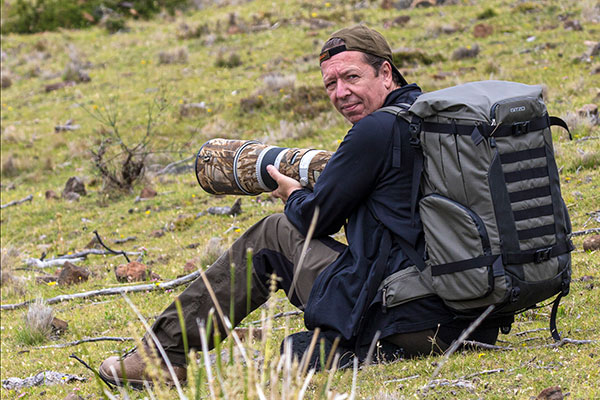
TOM SVENSSON • Conservation photographer
Tom Svensson is a world-renowned conservation photographer, born in Denmark but raised in Sweden and living in Fjällbacka. Tom’s great driving force in life is nature conservation and, as he says: “I’m not doing it for myself but for my children and grandchildren. If we don’t do it for them now, it will be too late for them to do anything themselves.” Tom’s skill as a photographer lies in taking pictures that affect people and make a difference. Images are a way of bringing about change, because the power of an image is great. In this field he is considered one of the world’s foremost.
Tom is a member of Naturfotograferna/N and is the only Swede elected to the IEPA, International Environment Photographers Association. He is part of Canon’s Nordic ambassador programme and is a Gitzo Ambassador. Read more about Tom Svensson here
LODGE
LODGE


GOOD TO KNOW
GOOD TO KNOW
TIPPING
Tipping is customary in many places around the world, including Zimbabwe. Service staff such as waiters, cleaners and porters usually have a very low fixed wage. They therefore depend on the tips they receive when they do a good job, and the tipping system is part of the culture we are visiting.
Tips for rangers/guides are not included in the price of the trip. An appropriate tip is approx. USD 10-15 per day for the ranger and USD 5 per day for the other camp staff. For the camp staff there is usually a communal tip box shared by all employees, and for the group’s rangers a joint sum is collected on the last day of the trip. Tipping is not compulsory, however, but something you leave if you have appreciated the service.
ELECTRICITY
Zimbabwe uses 220 volts. Both the British three-pin plug, type G, and type D, which is an older standard, are used. Visitors from Europe therefore need an adapter – preferably bring an adapter set with several options. Also bring a power strip with 2-3 sockets so that you can easily charge camera batteries, phone and other electrical equipment.
Electricity is scarce in the country and at the camp it is generated by solar panels or generators, which is why it is mainly available in the morning and evening. During the night we must bring the equipment into the tents, as hyenas may explore the camp and take “toys” with them.
INSURANCE
We recommend comprehensive travel insurance when travelling to Zimbabwe. The standard of hospital equipment is low throughout the country and serious medical cases usually have to be evacuated to South Africa, which can be very expensive without the right insurance. See also our website regarding cancellation protection and travel insurance.
THE CLIMATE
Zimbabwe’s climate is tropical but is moderated by the country’s altitude. September and October belong to the hot and dry period, and the rainy season does not arrive until November/December. During our stay, daytime temperatures are around 30 degrees, but at night it can drop to about 12-15 degrees.
CLOTHING
Casual dress applies throughout the stay in Zimbabwe. Bring comfortable walking shoes and hard-wearing clothes, as we spend the days on safari – preferably in khaki or earth colours and preferably no light colours in the national park. Dirt and dust also show less on khaki-coloured clothing. Early in the morning it can be chilly, so we recommend bringing a jacket or a warm sweater.
CREDIT CARDS
Foreign credit cards are only accepted to a limited extent in Zimbabwe and do not work for cash withdrawals. At the camp, credit cards are not accepted at all. However, not much cash is needed, as full board including all local drinks is included.
STOMACH UPSETS
As the bacterial flora in Zimbabwe is different from what we are used to at home, you need to be a little extra careful. Stomach problems and diarrhoea are very often caused by poor water and sewage treatment, or by eating bad or uncooked food. Therefore do not drink tap water – buy bottled water instead. We also recommend that you brush your teeth with bottled water, never eat fruit without washing it first, and never take ice in your drinks.
We recommend bringing plenty of hand sanitiser and always washing your hands with it before meals. Also bring medicine containing loperamide, such as Bifiform Travel or Imodium Plus, in case bad luck strikes. These are available over the counter. It is also important to drink plenty of fluids to avoid dehydration.
FOOD AND DRINK
At the camp, all meals are included in the price of the trip, including all local drinks. Lunches and dinners are served outside under the large tree canopies right by the Zambezi River.
The food in Zimbabwe is mainly traditional African, although the time as a British colony has left its mark. The most common dish is sadza, a kind of thick maize porridge that is usually eaten with the fingers and used in the same way as bread is used in many other parts of the world.
MOSQUITOES / MALARIA
Malaria is spread by mosquitoes that transfer parasites to humans when they bite, and the disease is present in Zimbabwe. Medication can be taken preventively, but no antimalarial provides absolutely certain protection, which is why it is important to also protect yourself against mosquito bites.
Mosquitoes mostly bite in the evening and at night. Use mosquito repellent, especially on your lower legs and feet, and preferably wear long trousers and a long-sleeved shirt in the evening. The camp’s tents are built with mosquito nets, which reduces the risk of being bitten. Consult your vaccination centre on how best to protect yourself.
INTERNET
The camp has no Wi-Fi connection. Some people occasionally manage to get a weak mobile signal in a few spots in Mana Pools, but expect to be offline during the week.
SAVE THE WILDLIFE
During the trip, species conservation will be highlighted in order to spread knowledge about the subject. Tom Svensson works as a conservation photographer with the aim of creating awareness and debate around species conservation. On this trip we focus, among other things, on the African wild dog. The trip gives you an excellent opportunity to photograph and experience the African wild dogs in their natural habitat and to learn more about species conservation.
LANGUAGES
The official main languages are Shona (most widely spoken), Ndebele and English; in addition there are 13 official minority languages. English is of course spoken in everything related to tourism.
SAFETY
The main safety risk for tourists in Zimbabwe is the traffic, especially in combination with the lack of adequate healthcare. Zimbabwe has left-hand traffic, so be extra attentive when walking around Harare. Our camp in Mana Pools is very safe and staff are always on site. Nevertheless, keep your passport, bank cards and other valuables in a safe and not too exposed place.
TAX FREE
If you plan to buy larger tax-free spirits or perfume, you need to buy them on the outbound journey and then pack them in your suitcase for the journey home. If you buy tax-free at Harare airport, for example a bottle or a perfume exceeding 100 ml, it will be confiscated at the security check at the first EU airport, regardless of whether you are only in transit. However, keep the weight limit for the small planes to Mana Pools in mind if you shop on the way out.
PHONE
You generally have (GSM) coverage in and around the cities, but not always in the more remote areas. Where there is coverage also depends on which operator you have and what agreements it has with local telecom companies in Zimbabwe. To call Zimbabwe, the country code is +263, and to call from Zimbabwe it is +46 to Sweden, +47 to Norway, +358 to Finland and +44 to the UK. Using a mobile phone in Zimbabwe is expensive, so check the prices with your mobile operator first.
TIME DIFFERENCE
There is no time difference between Sweden/Norway and Zimbabwe during the trip. Finland is one hour ahead of Zimbabwe and the UK one hour behind.
WATER
Never drink tap water, as it is not always clean and has a completely different bacterial flora from what you are used to. Always drink bottled water. Bottled water is available at the camp and can be brought along on safari.
IMPORTANT PHONE NUMBERS
Photographer: Tom Svensson +46 76 876 87 48
Zoom Photo Tours: Hans Elmqvist +46 70 180 90 99
Emergency number in Zimbabwe: 999 (from a mobile 112)
Swedish Embassy in Harare: +263 24 2 302 636
WEBSITES
Zimbabwe Parks and Wildlife Management zimparks.org.zw
Lonely Planet www.lonelyplanet.com/zimbabwe
Swedish Embassy in Harare www.swedenabroad.se
Machaba Safaris / Mana River Camp machabasafaris.com
PACKING LIST
Remember to pack as light as you can, as the smaller planes cannot take off if the group’s luggage is too heavy. The guideline is a maximum of about 20 kg in total for bag and camera bag. Below are some equipment tips. These are not requirements but rather guidelines.
BAGS
- A soft bag as your suitcase. Hard suitcases are not taken on the small planes.
- A camera bag.
SHOES AND CLOTHING
- A pair of sturdy walking shoes, or boots.
- A pair of sandals or lighter shoes for the camp.
- Summer clothes such as shorts and trousers plus light polo shirts and shirts. Preferably no light colours in the national park.
- Long-sleeved shirt / a pair of long trousers for protection against mosquito bites.
- A warm sweater, as it can be chilly early in the morning.
- A cap or other sun protection.
- Sunglasses.
- Toiletries.
OTHER EQUIPMENT
- A good torch or headlamp.
- Mobile phone.
- Power adapter (type G and D).
- Sewing kit for emergency repairs.
MEDICAL ITEMS
- Plasters.
- Mosquito repellent.
- Antiseptic cream.
- Paracetamol or equivalent painkillers.
- Lip balm with sun protection factor.
- Sunscreen.
CAMERA EQUIPMENT
- A camera with a telephoto lens up to 600 mm, plus preferably a short zoom such as a 70-200.
- A teleconverter, 1.4x or 2x.
- A polarising filter is useful for increasing the saturation in your images.
- A monopod, if you can fit it within the weight limit.
- Extra batteries and battery chargers for the camera and other electronic equipment.
- A power strip with 2-3 sockets so that you can charge camera batteries, phones and other equipment at the same time.
- Memory cards as needed, plus a portable hard drive or computer to transfer to.
- Cleaning equipment such as cleaning cloths and compressed air, plus some kind of dust protection for the camera.
- A laptop for photo editing with either Photoshop or Lightroom.
NEWSLETTER
CONTACT US
Phone: +46 (0)470 – 466 40



Photo: Serkan Günes
NEWSLETTER
Be the first to hear about new trips, offers and travel inspiration from Zoom.
CONTACT US
Email: info@zoomfotoresor.se
Phone: +46(0) 470 – 466 40
Follow our photo adventures on social media!
Photo: Hans Strand